Sustainability
Sustainable packaging guide: kraft, paper tape & recyclability
Sustainable packaging means choosing materials that are renewable, recyclable and no bigger than they need to be. This guide from Foldwell explains what that looks like in practice — why kraft works, how it's recycled, and how to swap the plastic out of a small brand's packaging kit. Last updated: .
What makes packaging sustainable?
Packaging is sustainable when it's made from renewable material, can be recycled or composted after use, and is sized to avoid waste. In practice that means favouring paper and board over plastic, avoiding mixed materials that can't be separated, and right-sizing the pack so you're not shipping air or padding a small item in a huge box. Kraft paper and board tick the first two boxes — they're made from a renewable fibre and are widely recycled — which is why they anchor most low-waste packaging kits.
In short: sustainable packaging is renewable, recyclable and right-sized — which is why kraft paper and board are the usual starting point.
Is kraft paper recyclable?
Yes — kraft paper and board are among the most widely recycled packaging materials. Kraft is made from wood fibre and can be recycled multiple times in standard kerbside paper and cardboard collections across the UK. To keep it recyclable, keep the kraft free of heavy plastic coatings and remove any non-paper components, like a plastic tape strip, before you put it in the recycling.
In short: kraft paper and board are widely recyclable kerbside — just keep them free of plastic coatings and tape.
How do I replace the plastic in my packaging?
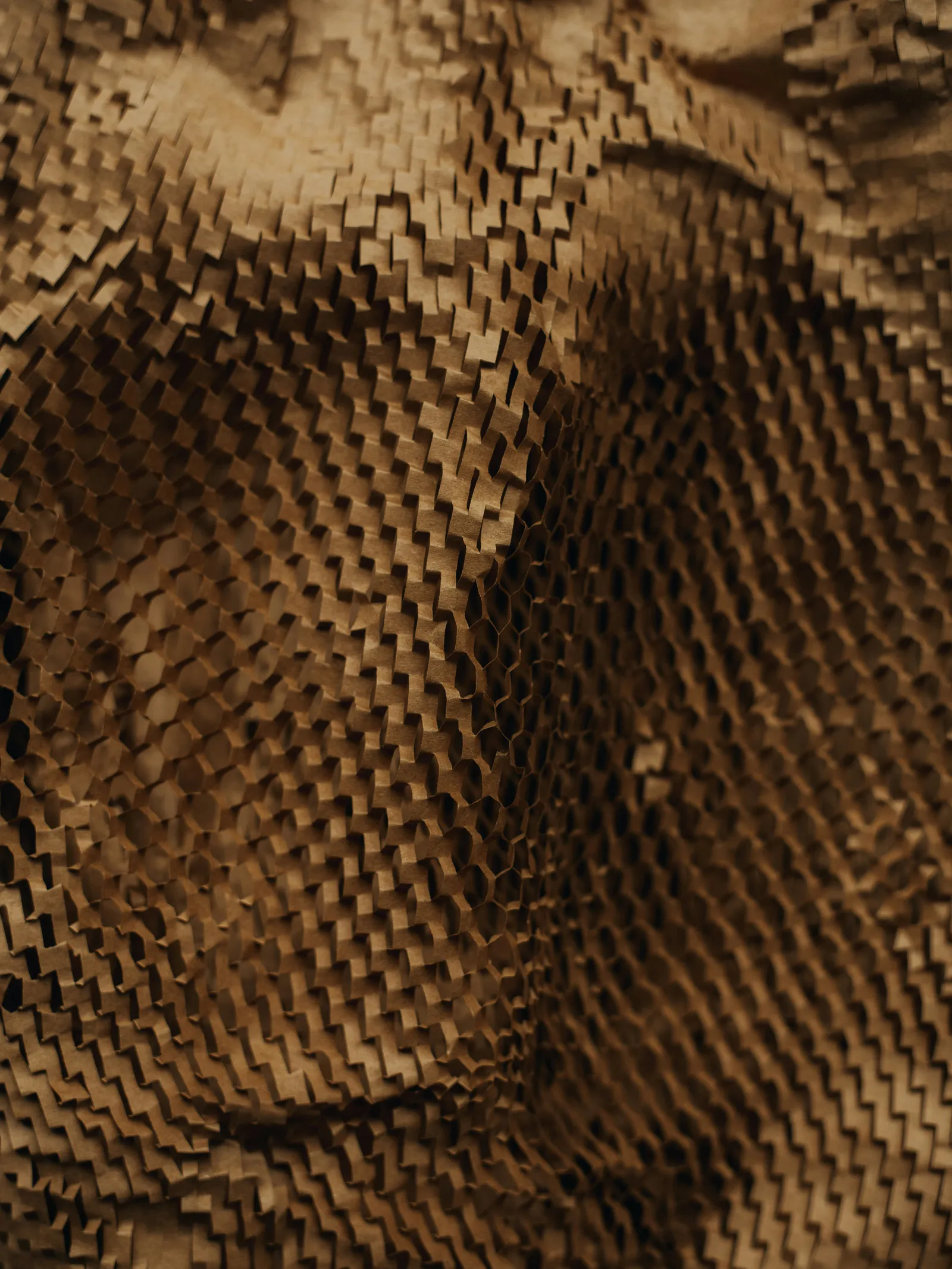
Replace plastic by swapping each plastic component for a paper-based equivalent, one at a time. Use kraft paper tape instead of plastic packing tape so the sealed box recycles in one piece; use expandable honeycomb kraft paper instead of bubble wrap to cushion bottles and jars; and choose kraft pouches and board boxes instead of plastic bags and foil-lined packs. Each swap removes a material your customer would otherwise have to separate or bin.
- Packing & craft tape — kraft paper tape to seal cartons without plastic.
- Kraft food pouches — paper-based stand-up pouches for dry goods.
- Beer & wine boxes — plain recyclable board carriers for bottles.
In short: swap plastic tape for paper tape, bubble wrap for honeycomb kraft, and plastic bags for kraft pouches and board boxes.
What does a low-waste packaging kit look like?
A low-waste kit pairs a right-sized kraft container with paper-based protection and a paper seal. For a food brand that's a kraft pouch sized to the fill weight; for a drinks or gift brand it's a board carrier box, honeycomb wrap around the bottle, a wine gift bag for presentation, and kraft paper tape to seal the outer. Everything in that list goes in the same recycling stream, which is what makes it genuinely low-waste rather than just low-waste-looking.
In short: a right-sized kraft container + paper protection + paper tape — all recyclable together — is the core of a low-waste kit.
Frequently asked questions
- Is paper tape better than plastic packing tape?
- Yes, for recyclability. Kraft paper tape can be recycled together with the cardboard box it seals, so the whole parcel goes in one recycling stream. Plastic packing tape has to be peeled off first because it contaminates cardboard recycling, which is why paper tape is the lower-waste choice for sealing boxes.
- What can I use instead of bubble wrap?
- Expandable kraft honeycomb paper is a widely used plastic-free alternative to bubble wrap. It stretches into a cushioning honeycomb that wraps bottles, jars and fragile items, then recycles with paper rather than going to landfill like plastic bubble wrap.
- Does sustainable packaging cost more?
- Not necessarily. Kraft pouches, paper tape and board boxes are competitively priced, and buying by the pack with no large minimum keeps costs predictable for small brands. The bigger saving is reputational: customers increasingly choose brands whose packaging they can recycle.
Related: choosing kraft food pouches →